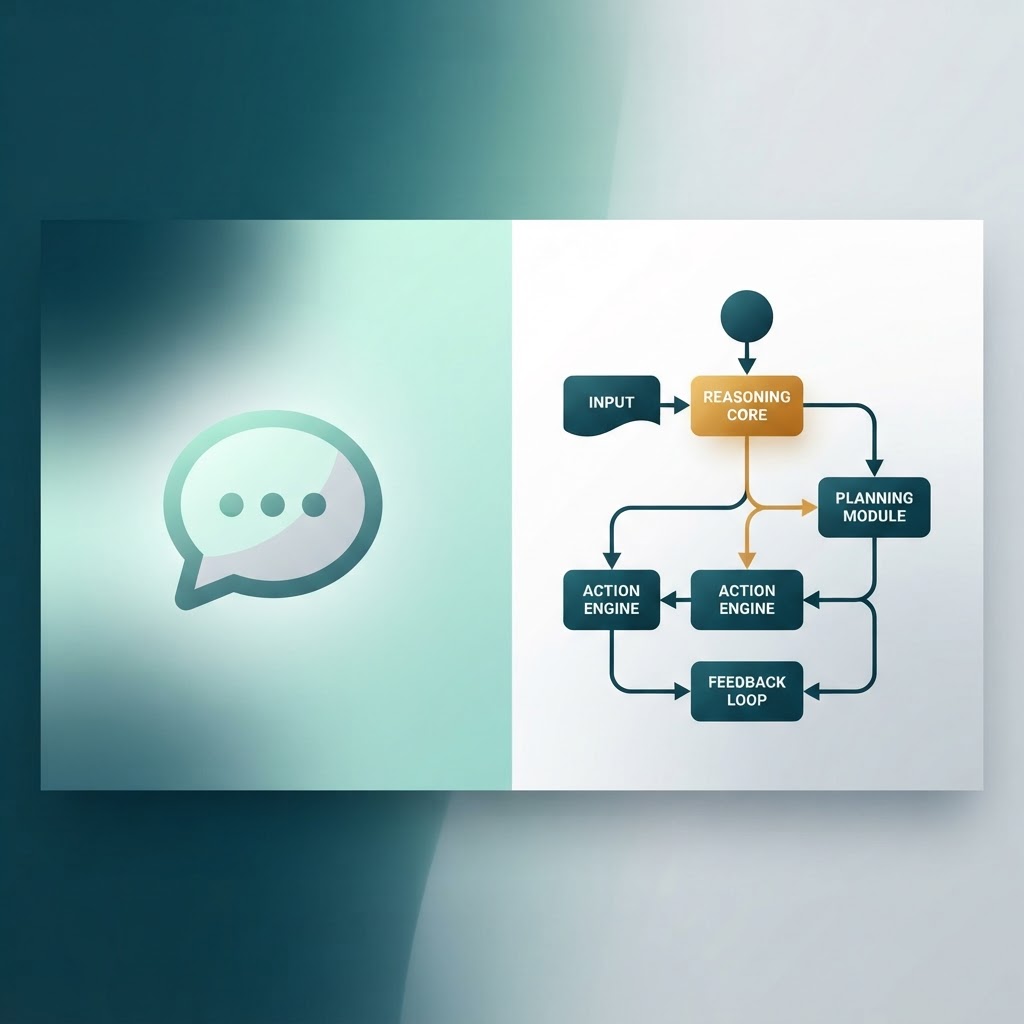

You ask a chatbot a question. It answers. You ask an AI agent to sort your support tickets, draft replies, escalate the urgent ones, and log everything in your CRM. It does.
That distinction, between responding and doing, is where the line between chatbots and AI agents actually falls. The rest of this article breaks down what separates the two, how each is built, when to choose one over the other, and what that decision means in practice.
The Short Answer
A chatbot is a conversational interface designed to exchange text with a user. Modern chatbots are powered by large language models, but their core job remains the same: take a message in, send a message back. They respond.
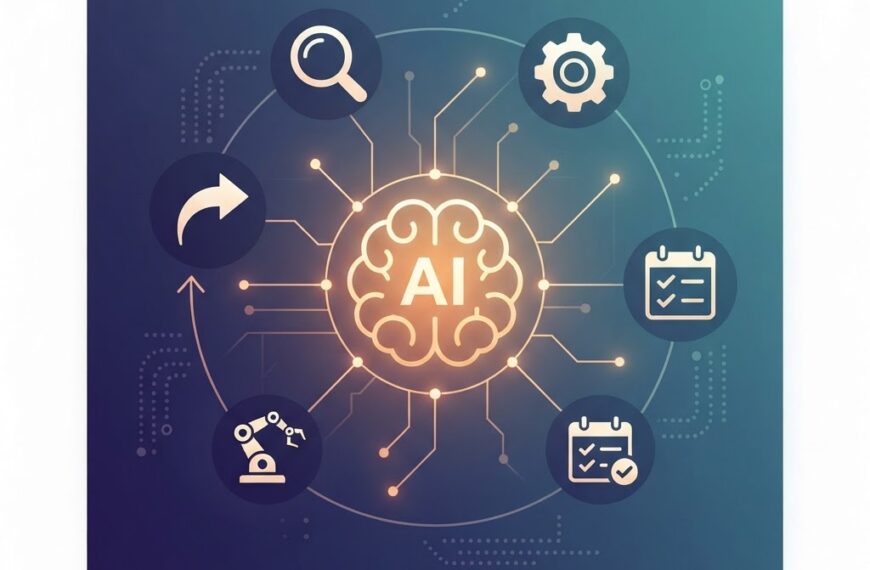
An AI agent is a system that uses a language model as a reasoning engine and adds the ability to plan, use tools, maintain memory, and take actions autonomously. It does not just talk about a task. It performs it.
Google Cloud defines AI agents as “software systems that use AI to pursue goals and complete tasks on behalf of users,” noting that they exhibit reasoning, planning, and memory. NVIDIA describes them as systems designed to “autonomously reason, plan, and execute complex tasks based on high-level goals.” Chatbots, by contrast, are conversational systems built to handle dialogue, typically within predefined boundaries.
If you have already read our plain-English guide to AI agents, this article goes deeper on the comparison and gives you a framework for deciding which to deploy.
How Chatbots Work
A chatbot, whether rule-based or LLM-powered, follows a relatively simple loop:
- Receive the user’s message.
- Process it, either by matching against rules or by generating a response with a language model.
- Return a text (or sometimes voice) reply.
- Wait for the next message.
That loop is fundamentally reactive. The chatbot does nothing until the user speaks, and it stops the moment the conversation ends. It has no goals of its own, no tools to call, and no ability to continue working after the chat window closes.
Older chatbots, built before LLMs, relied on decision trees and keyword matching. If the user said “refund,” the bot branched to the refund flow. These systems were rigid but predictable. Modern LLM-based chatbots are far more flexible in understanding language, but structurally they still operate in the same respond-and-wait pattern.
How AI Agents Work
An AI agent adds layers on top of the language model that change what the system can actually do. The core loop is different:
- Receive a goal from the user or from another system.
- Reason about what the goal requires, using the LLM as a planning engine.
- Break the goal into steps, each of which may involve calling an external tool or API.
- Execute the first step and observe the result.
- Use that result to decide the next step, adjusting the plan if something unexpected happens.
- Continue until the goal is met or the agent determines it cannot succeed.
This reason-plan-act cycle, often associated with the ReAct framework introduced by Yao et al. in 2022, is what gives agents their autonomy. The agent does not need you to prompt it at every step. You give it an objective and it figures out how to get there.
The key additions that make this possible:
- Tool use: agents can call APIs, run code, query databases, and interact with other software. A chatbot tells you the weather. An agent checks the weather, decides whether to reschedule an outdoor event, and sends updated invitations.
- Memory: agents can maintain context across sessions and remember past actions, letting them work on tasks that take hours or days rather than a single conversation turn.
- Planning: agents decompose complex goals into sequences of steps, reorder them based on results, and recover from failures without human intervention.
The Core Differences
| Dimension | Chatbot | AI Agent |
|---|---|---|
| Primary function | Conversational response | Goal-directed action |
| Trigger | Each user message | A goal or objective |
| Autonomy | None, responds only when prompted | Can work independently between steps |
| Tool use | Minimal or none | Central to operation, calls APIs and external systems |
| Memory | Limited to the current session | Short-term and long-term, persists across sessions |
| Planning | No multi-step planning | Breaks goals into ordered steps, adjusts dynamically |
| Failure handling | Falls back to a default response or escalates to a human | Can retry, try alternative approaches, and self-correct |
| Output | Text (sometimes voice) | Text, but also executed actions, updated records, sent emails, changed system states |
When a Chatbot Is the Right Choice
Chatbots remain the better tool for many use cases:
- FAQ and support routing: when users need quick answers to common questions, a chatbot handles this efficiently and at low cost.
- Guided workflows: when you want users to follow a specific path, like checking an order status or booking an appointment slot, a chatbot’s conversational structure works well.
- First-line triage: chatbots can gather initial information before handing off to a human, reducing the burden on support teams.
- Brand interaction: for many businesses, a conversational front door is enough. Users ask, the bot answers, the interaction ends.
If your requirement is “answer questions about our product,” a well-built chatbot is sufficient, cheaper to deploy, simpler to maintain, and easier to control.
When an AI Agent Is the Right Choice
Agents earn their complexity when the task requires action, not just conversation:
- Multi-step operations: when completing the task means chaining several actions together, like pulling data from a database, analyzing it, formatting a report, and emailing it, an agent handles the chain autonomously.
- Cross-system work: when the task touches multiple tools, your CRM, email, a database, and an internal API, an agent orchestrates them in sequence.
- Autonomous monitoring: agents can watch for events, like a new support ticket or a lab result outside reference ranges, and take action without being prompted.
- Decision-making with feedback: agents can evaluate their own output, detect errors, and adjust. If an API call fails, the agent can retry with different parameters or try an alternative route.
The trade-off is straightforward: agents are more capable but also more complex to build, harder to predict, and require more guardrails. They are worth the investment when the task genuinely demands autonomous action.
A Practical Decision Framework
Ask yourself these questions:
- Does the task end with a response, or does it require action? If the answer is a message, use a chatbot. If the answer is a changed system state, consider an agent.
- Is the task single-step or multi-step? Single-step tasks are chatbot territory. Multi-step tasks that chain together benefit from an agent’s planning capability.
- Does the system need to work across multiple tools? If yes, agents are designed for exactly this.
- How much autonomy do you actually want? If you want tight control over every interaction, chatbots are safer. If you want the system to handle end-to-end workflows with minimal supervision, agents are the right fit.
Why This Matters for Your Business
The distinction is not academic. It changes how you plan, build, and budget for AI.
A chatbot is a feature, an interface you add to an existing product. Its scope is bounded: it handles conversations. You can deploy one in days, measure its impact quickly, and keep it contained.
An AI agent is closer to a worker. It touches your systems, makes decisions, and takes actions that have real consequences. It needs guardrails, monitoring, and clear boundaries on what it is and is not allowed to do. But it can also handle workloads that a chatbot fundamentally cannot.
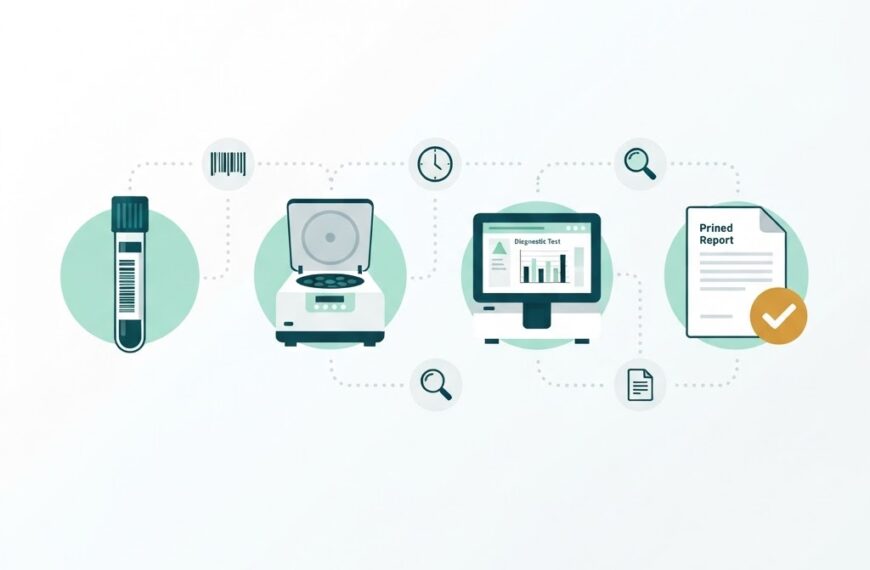
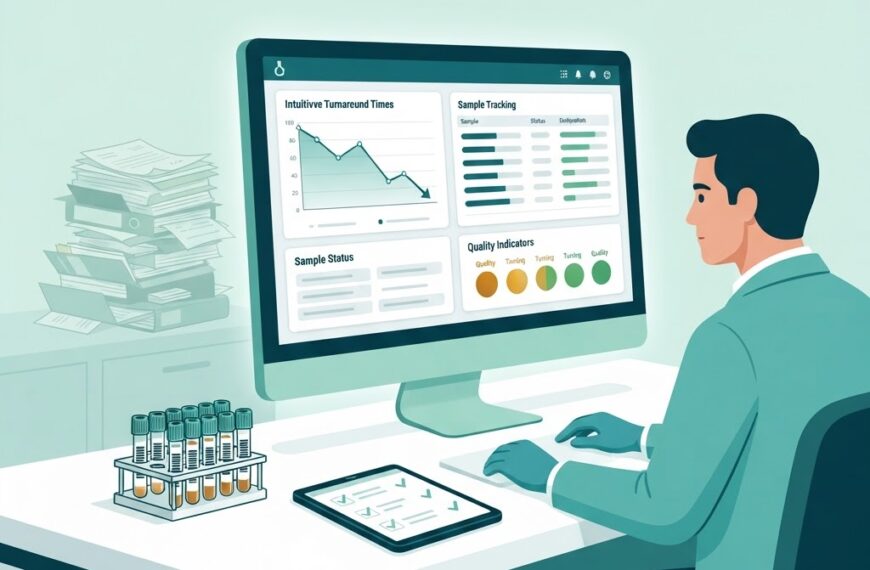
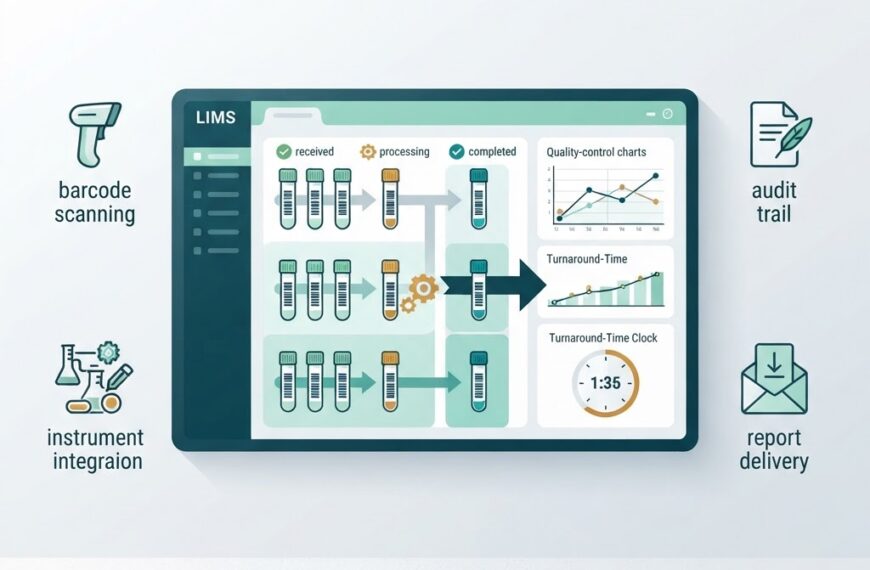
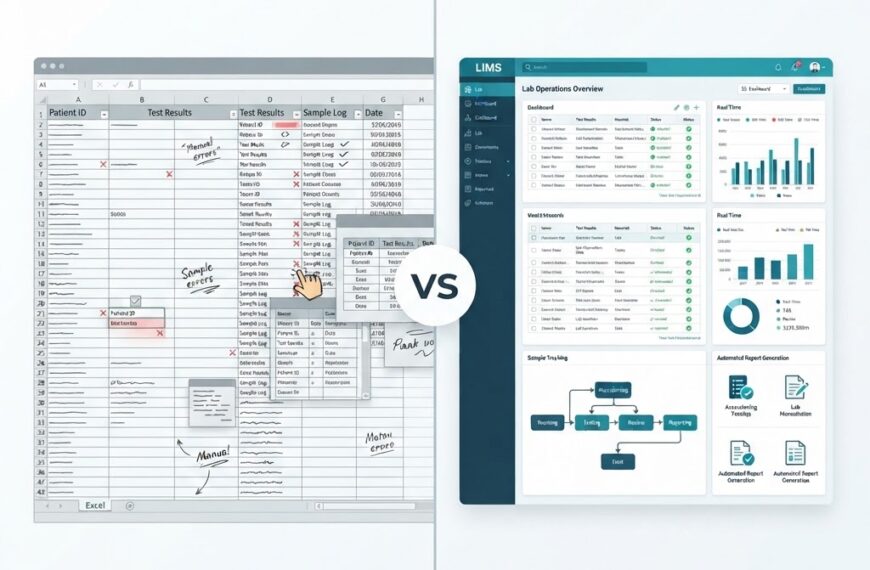
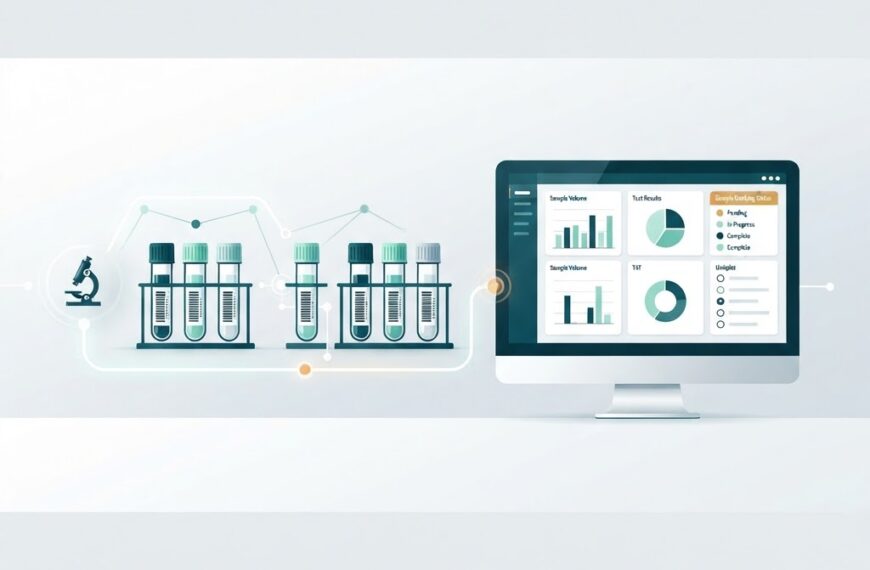
At Ideativemind, we build both. Our diagnostic lab product, IdLabNet, uses agents to automate sample workflows, trigger alerts on abnormal results, and route reports, work that goes far beyond what a conversational bot could manage. Whether you need a simple chatbot for customer interactions or an agent system that orchestrates real operations, the starting point is understanding what you actually need the system to do.
Conclusion
Chatbots respond. Agents act. That is the difference in five words.
Both have a place in modern software. Chatbots are simple, controllable, and effective for conversational tasks. AI agents are more powerful, more autonomous, and the right tool when a task requires planning, tool use, and multi-step execution. The mistake to avoid is reaching for an agent when a chatbot would do, or settling for a chatbot when your workflow actually needs something that can act.
If you are thinking through which approach fits your use case, reach out to us. We can help you scope the problem, choose the right architecture, and build it.

 By
By