
Agentic AI is one of the most overused terms in technology right now. Every vendor has a slide deck about it, every conference panel debates it, and the headline numbers around it are striking. Gartner predicts that 40% of enterprise applications will feature task-specific AI agents by the end of 2026, up from less than 5% in 2025. The same firm also predicts that more than 40% of agentic AI projects will be canceled by the end of 2027 due to escalating costs, unclear business value, or inadequate risk controls.
Both numbers can be true at the same time. Adoption is accelerating, and disappointment is following close behind, because the word “agentic” is doing a lot of work without anyone agreeing on what it means. This article clears that up: what agentic AI actually is, how it differs from the AI you already use, where you can see it today, and the honest limitations that explain why so many pilots stall.
What Is Agentic AI?
Agentic AI refers to AI systems that can autonomously pursue a goal by deciding what to do, taking action, observing the result, and adjusting, without a human stepping in for every step. The term comes from the word “agent,” and it is the property of an AI system acting like an agent rather than a tool that only responds when prompted.
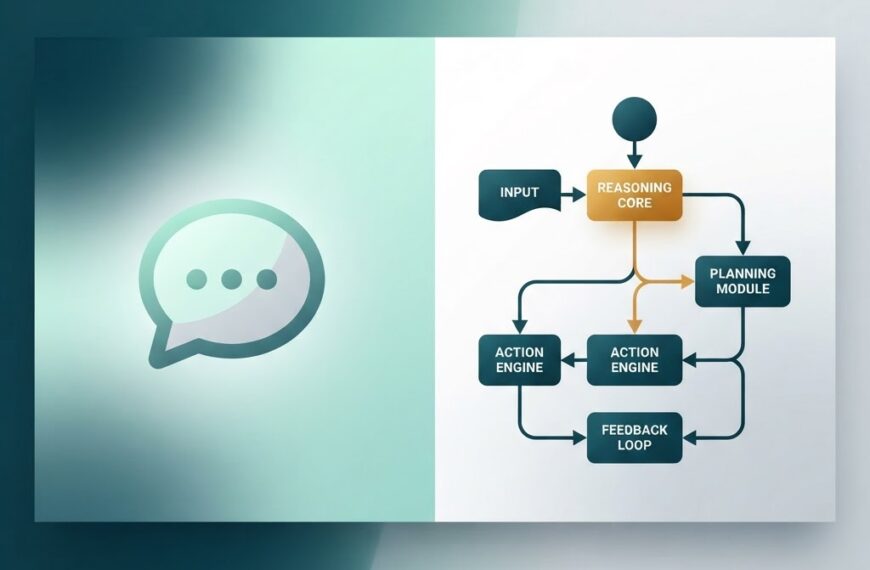
Google’s own AI glossary defines agentic AI as “the capability of AI systems to operate autonomously.” That single word, autonomously, is what separates agentic AI from the chatbot you used last week. A chatbot answers your prompt and stops. An agentic system takes a higher-level goal, figures out the steps to reach it, calls the tools it needs, checks whether each step worked, and only stops when the goal is done or it can reasonably ask for help.
A simple way to think about it: generative AI produces content. Agentic AI produces outcomes.
Agentic AI vs Generative AI
These two terms get confused constantly. The distinction is not technical jargon, it is a real shift in what the software does.
| Aspect | Generative AI | Agentic AI |
|---|---|---|
| Core job | Create content from a prompt | Achieve a goal by acting |
| Who decides the steps | The human | The system figures them out |
| Trigger | Each prompt from the user | A higher-level goal |
| Tools | One output per request | Calls APIs, databases, other software |
| Stops when | The output is generated | The goal is met, or it asks for help |
| Example | “Write me a refund email” | “Process all refund requests from last week, approve the ones under $50, and email the rest to the manager” |
Both can use the same underlying language model. The difference is the wrapper around it: the planning loop, the tools, the memory, and the permission to act. The model is the engine; the agentic system is the car, steering wheel, and driver combined.
Agentic AI vs AI Agents
You will see “agentic AI” and “AI agents” used almost interchangeably, and for most practical purposes they are. There is a small distinction worth knowing.
An AI agent is a specific software system built to act autonomously. Agentic AI is the broader category or behavior, the property of acting agentically, that an AI agent exhibits. One is the noun, the other is the adjective. When a vendor says their product features “agentic AI,” they usually mean it contains one or more AI agents.
If you want a deeper walkthrough of how a single AI agent is built, what components it has, and the types of agents from simplest to most sophisticated, our guide to AI agents covers that ground. This article focuses on the agentic category as a whole: what it looks like deployed, and where it breaks.
Examples of Agentic AI in Practice
Agentic AI is not a hypothetical category. Production implementations exist today, and they fall into a few recognizable patterns.
Customer support that resolves, not just replies
Traditional chatbots route tickets or answer FAQs. Agentic support systems can read the customer’s message, look up the order in a database, check the return policy, decide whether to issue a refund, process the refund through the billing API, and close the ticket, all without a human until the case is genuinely ambiguous. McKinsey highlights this kind of closed-loop, autonomous resolution as a core agentic use case in its research on seizing the agentic AI advantage.
Software development agents
OpenAI’s Agents SDK, Anthropic’s Claude tool-use features, and open frameworks like LangChain and Microsoft AutoGen all support agentic coding workflows. The agent does not just suggest a patch. It can read the bug report, locate the file, write a fix, run the test suite, interpret failures, revise the code, and open a pull request. A developer reviews the result instead of writing every line.
Internal operations and finance
Agentic systems are increasingly used for multi-step internal workflows: reconciling invoices against purchase orders, flagging mismatches, drafting the exception report, and routing it to the right approver. These are the “boring but expensive” processes where autonomy adds measurable value, provided the agent has clean tool access and clear stopping conditions.
Lab and clinical operations
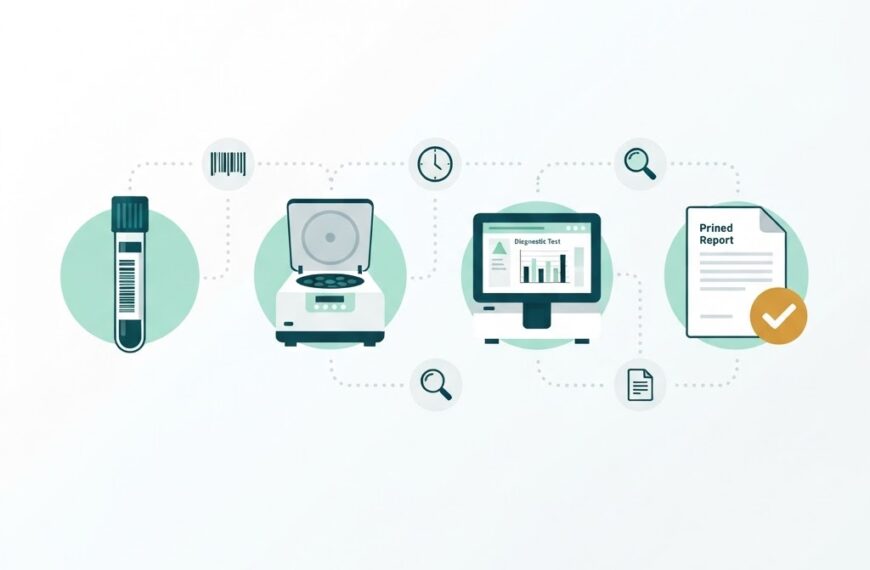
This is where the agentic concept gets especially relevant for our own work at Ideativemind. A modern LIMS like IdLabNet already automates large parts of the sample lifecycle. An agentic layer on top could monitor incoming results, identify values outside reference ranges, draft a notification to the pathologist, and update the patient record, without a technician manually triaging every report. The agentic part is the goal-oriented decision loop, not the data storage.
The Agentic Loop
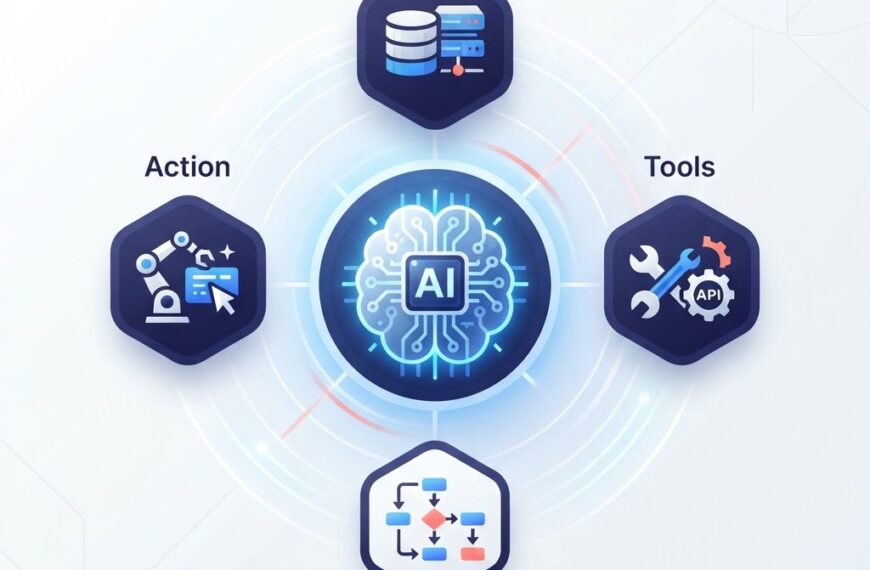
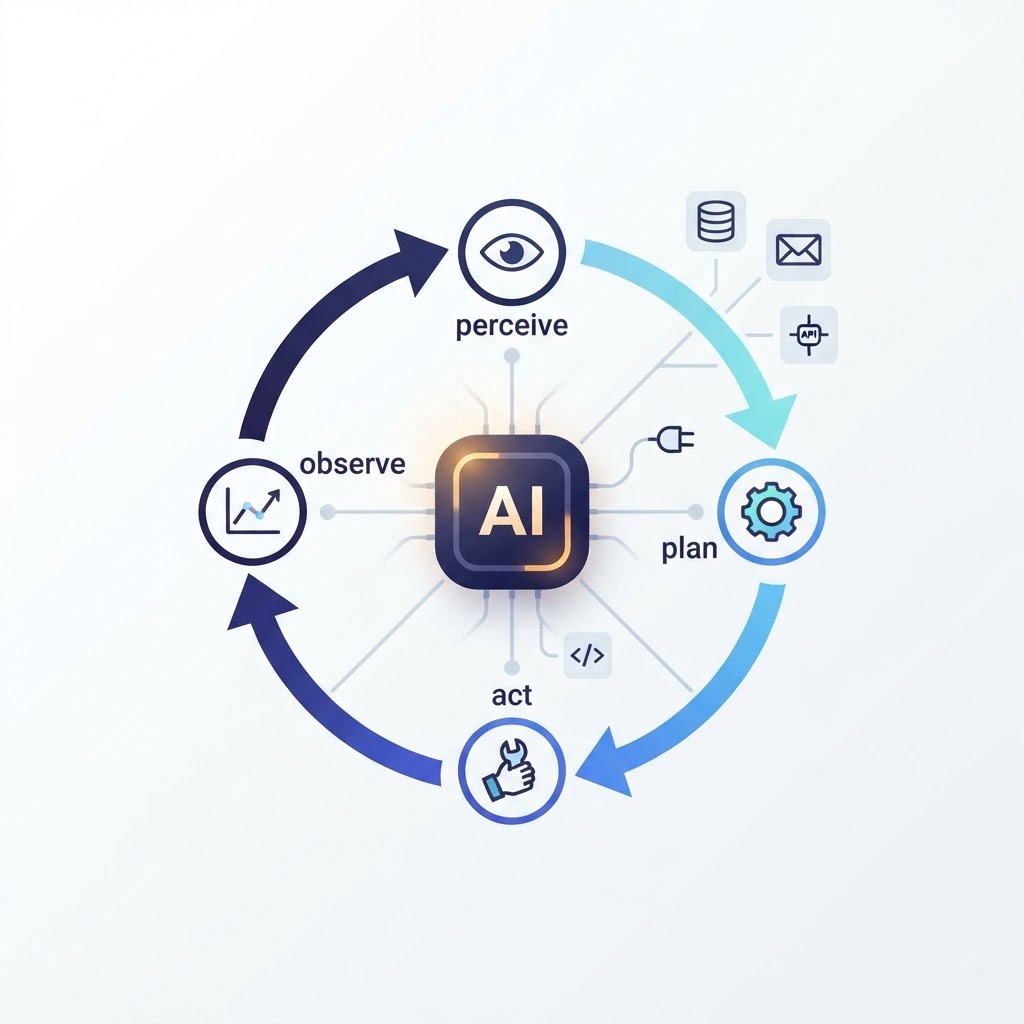
Underneath every example is the same basic pattern, often called the agentic loop or the perceive-plan-act-observe cycle:
- Perceive: the system takes in its current state, whether that is a user message, a database snapshot, or a stream of events.
- Plan: the language model breaks the goal into concrete steps.
- Act: the system calls a tool, API, or database to execute one step.
- Observe: the system checks what happened as a result.
- Repeat: if the goal is not yet met, the loop continues with the new state.
The loop is what makes the behavior agentic. Without it, you have a model. With it, you have a system that can actually get something done over multiple steps.
Limitations and Risks
This is the section most vendor decks gloss over. Agentic AI is powerful and genuinely early, and the failure modes are not theoretical.
Hallucinations compound across steps
A single wrong fact in a chat response is annoying. The same wrong fact inside a multi-step plan becomes the source of the next three actions, and each of those actions has consequences in the real world. The agentic loop amplifies errors because it chains them.
Unpredictable behavior under autonomy
When a system chooses its own steps, it can choose bad ones. Agents have been documented sending real emails, modifying live data, and even attempting to purchase items that humans never approved, because the tool was available and the goal was loosely defined. Autonomy without guardrails is not a feature, it is a liability.
Security: prompt injection and privilege escalation
Agentic systems that connect to tools and data inherit a new attack surface. A prompt injection, malicious instructions hidden in data the agent reads, can trick the agent into taking actions the operator never intended. If an agent holds credentials to send email or move money, that risk becomes operational, not academic. Security researchers have flagged prompt injection and privilege escalation as among the most serious agentic risks in 2025.
Cost and unclear value
Gartner’s prediction that more than 40% of agentic AI projects will be canceled by the end of 2027 calls out escalating costs and unclear business value as primary drivers. Each step in the agentic loop is a model call, often on a large language model, and that gets expensive fast. If the process the agent automates is not painful enough or frequent enough to justify the cost, the pilot looks impressive in a demo and fails the budget review.
Integration and reliability
Connecting an agent to existing systems is where most projects actually stall. APIs need to be stable, data needs to be clean, and the agent needs to fail gracefully when something downstream breaks. Too many pilots assume a tidy environment that real enterprises do not have. On legacy systems, an agent’s first failure can corrupt data instead of just returning an error.
When Agentic AI Is Worth It
Based on what has actually worked in production, agentic AI tends to deliver value when three conditions are met:
- The task is multi-step and repetitive, not a single prompt.
- There are clean, reliable tools or APIs the agent can call.
- There is a clear stopping condition and a human review path for ambiguous cases.
If any of those three is missing, the project is a candidate for the 40% that Gartner expects to be canceled. If all three are in place, agentic AI can take a real workflow off human plates and pay for itself.
What This Means for Your Organization
Agentic AI is not a single product you buy. It is a capability you build into how your applications and operations work. The practical question is not “should we adopt agentic AI,” it is “where, in our specific workflows, does the agentic loop actually fit, and what are the guardrails around it.”
If you are exploring where AI agents can fit into your operations, from laboratory workflows to internal automation, we can help you scope the opportunity and the risks. Get in touch with Ideativemind to talk through what an agentic system could look like in your environment, or learn more about how we approach AI-driven business operations.

 By
By